

BMW ISETTA

The BMW Isetta is one of the most unique and iconic vehicles in automotive history
The BMW Isetta is one of the most unique and iconic vehicles in automotive history, representing an innovative response to post-war economic challenges. Its quirky design and practicality made it a symbol of 1950s ingenuity. Here’s an in-depth look at its history and significance:
Background and Origins
- Italian Roots: The Isetta was originally designed by the Italian company Iso SpA in the early 1950s as a compact and affordable “bubble car” for urban transportation.
- BMW’s Acquisition: In 1954, BMW acquired the licensing rights to the Isetta to address the need for a low-cost vehicle during Germany’s post-war economic recovery. BMW redesigned the Isetta, improving its engineering while retaining its distinctive appearance.
Design
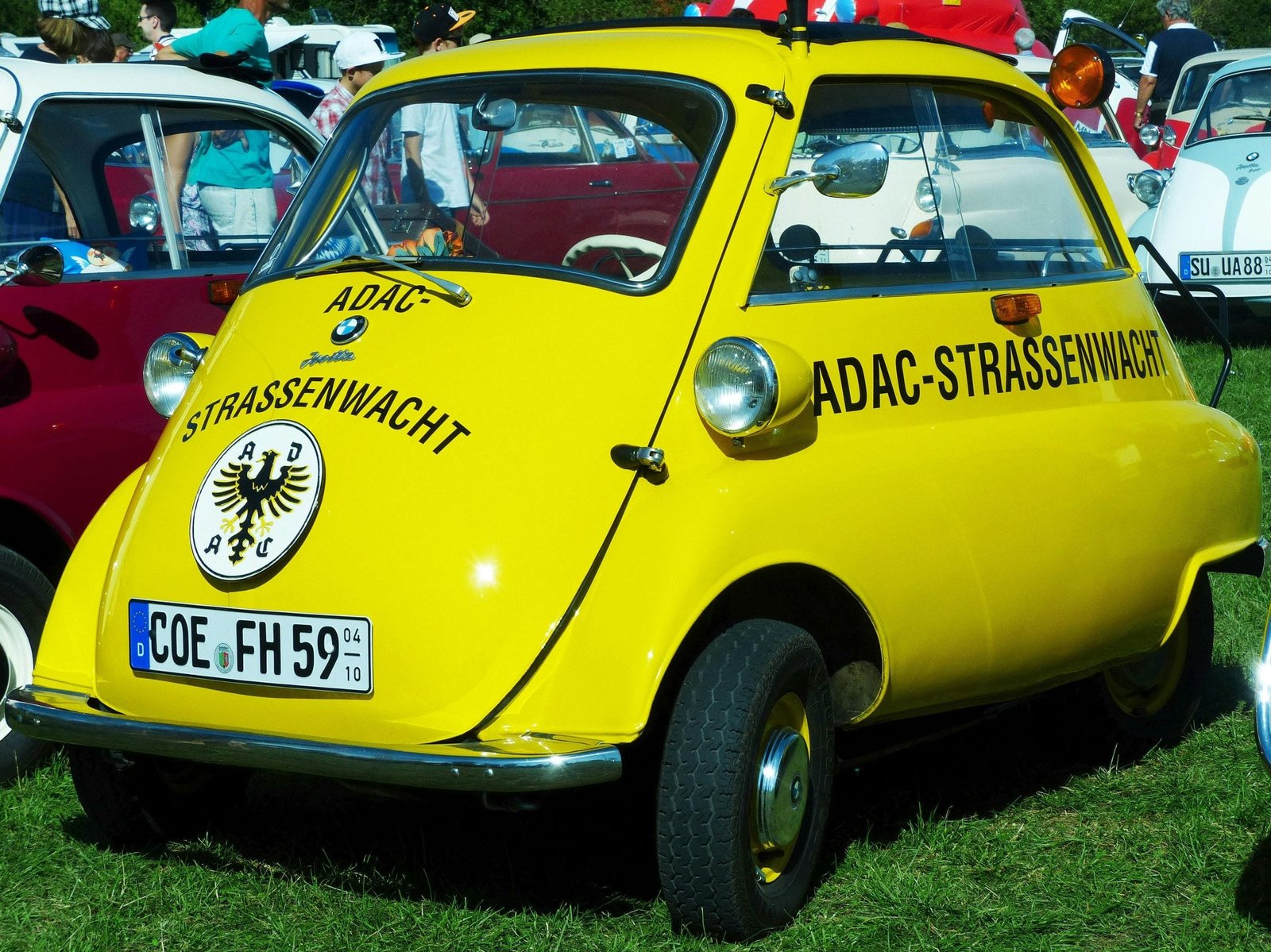
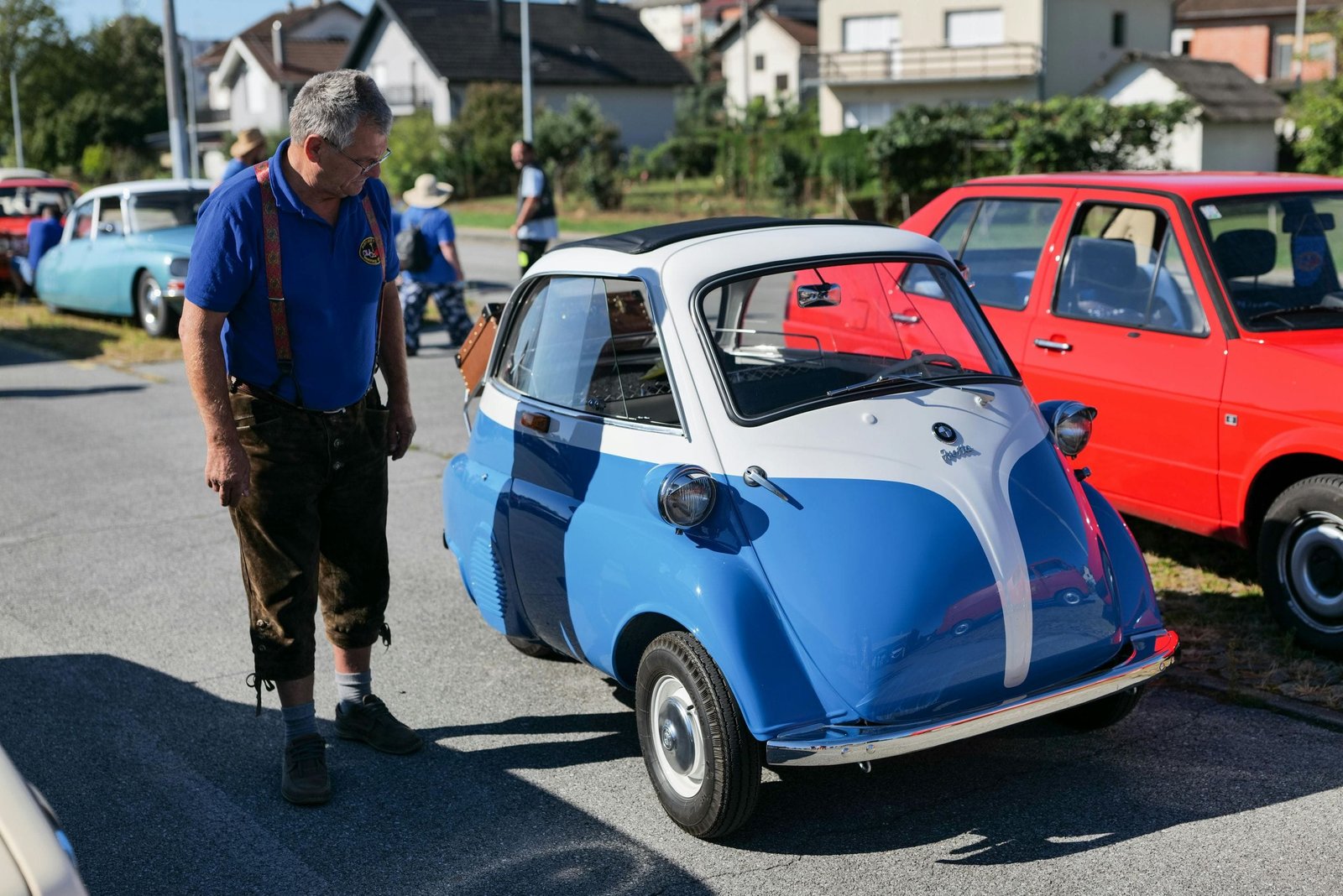
- Iconic Styling: The Isetta’s egg-shaped body, large bubble-like windows, and single front-hinged door created its unmistakable silhouette. Its compact design made it highly maneuverable in urban environments.
- Innovative Access: The entire front of the car functioned as the door, including the steering column, which pivoted outward for easy entry and exit.
- Two-Seater Layout: With seating for two and a small luggage compartment, the Isetta was ideal for city commuting.




Specifications
- Engine:
- The BMW Isetta was powered by a single-cylinder, 4-stroke engine derived from BMW’s motorcycle division.
- Initially equipped with a 250cc engine, BMW later introduced a 300cc version, increasing its top speed to about 53 mph.
- Fuel Economy: Known for exceptional fuel efficiency, the Isetta achieved up to 70 miles per gallon, making it highly economical.
- Transmission: A 4-speed manual gearbox drove the rear wheels, which were closely spaced to reduce drivetrain complexity.
- Suspension: Independent suspension on all wheels ensured a surprisingly smooth ride for such a small car.
Popularity and Success
- Sales Triumph: The Isetta became BMW’s best-selling car during its production run from 1955 to 1962, saving the company from financial collapse. Over 160,000 units were sold, cementing its place in automotive history.
- Global Appeal: The Isetta was produced in various markets, including Germany, the UK, and Brazil, each with minor variations to suit local needs.
- Cultural Icon: The Isetta’s unique appearance made it a symbol of 1950s culture and an enduring classic.
Legacy
- Revolutionary Microcar: The Isetta demonstrated that a microcar could be practical, stylish, and affordable, influencing future small car designs.
- Pop Culture: The Isetta gained renewed fame as Steve Urkel’s car in the 1990s TV sitcom Family Matters, introducing it to a new generation.
- Collector’s Favorite: Today, the BMW Isetta is a sought-after classic, beloved for its charm, simplicity, and historical importance.